Installing a Solar Attic Fan: What the Process Actually Looks Like, Start to Finish
A solar attic fan can pull serious heat out of a Tucson attic without adding a dime to your electric bill. Here's how the installation works, what to expect on the day, and how to know if it's the right call for your home.
Solar attic fan: A solar attic fan is a roof-mounted exhaust ventilator powered by an integrated photovoltaic panel that draws hot air out of an attic and expels it outside. It operates without a connection to household electricity, running automatically during daylight hours to reduce attic heat buildup and lower the thermal load on a home's cooling system.
You're Probably Asking Because Your House Is Hot Right Now
It's August in southern Arizona. Your AC runs almost constantly, the rooms over the garage feel like a sauna, and someone told you a solar attic fan might help. That's a reasonable place to be. The question is whether it's actually worth doing, and if so, what the installation involves. This article walks through both. We'll cover how a solar attic fan works, what happens during installation, what it does and doesn't fix, and how it pairs with insulation. By the end, you'll have a clear enough picture to decide whether to move forward.

What a Solar Attic Fan Actually Does
An attic in Tucson on a summer afternoon can reach 150 to 160 degrees Fahrenheit. That superheated air doesn't just sit there. It radiates down through your ceiling into your living space, making your AC work harder than it should and driving up your energy bills. A solar attic fan is a powered exhaust vent mounted on your roof. It pulls that hot air out of the attic and pushes it outside, replacing it with cooler outside air drawn through your soffit vents. The solar panel on the fan powers the motor directly, so the unit runs hardest on the sunniest, hottest days, which is exactly when you need it most. There's no wiring to your electrical panel, no increase to your electric bill, and no switch to flip. It runs automatically whenever there's enough sun. The goal is to keep attic temperatures closer to outside ambient temperature rather than letting them climb 40 or 50 degrees above it. That reduces the heat load on your ceiling and takes some pressure off your air conditioning system.
What the Installation Process Looks Like
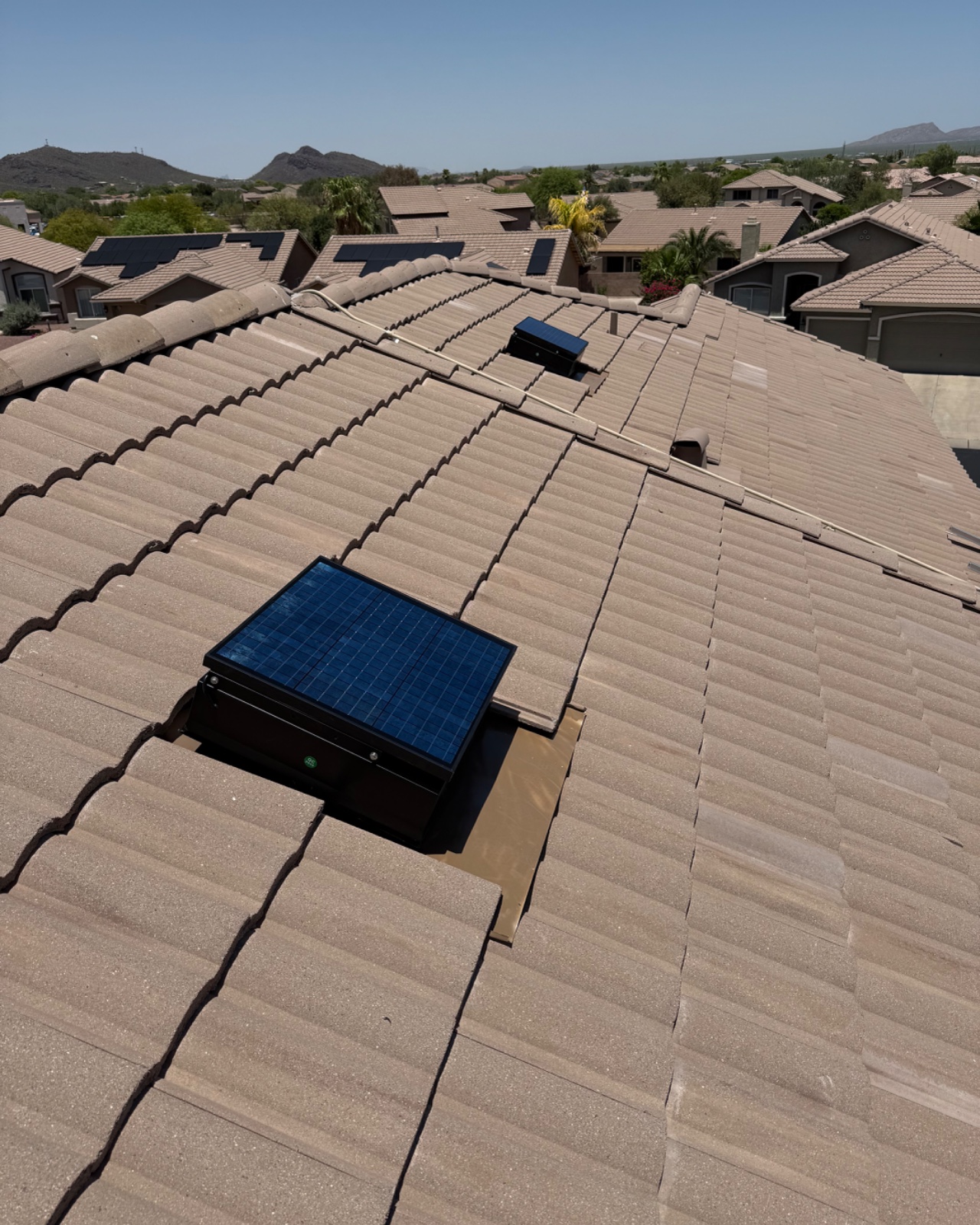
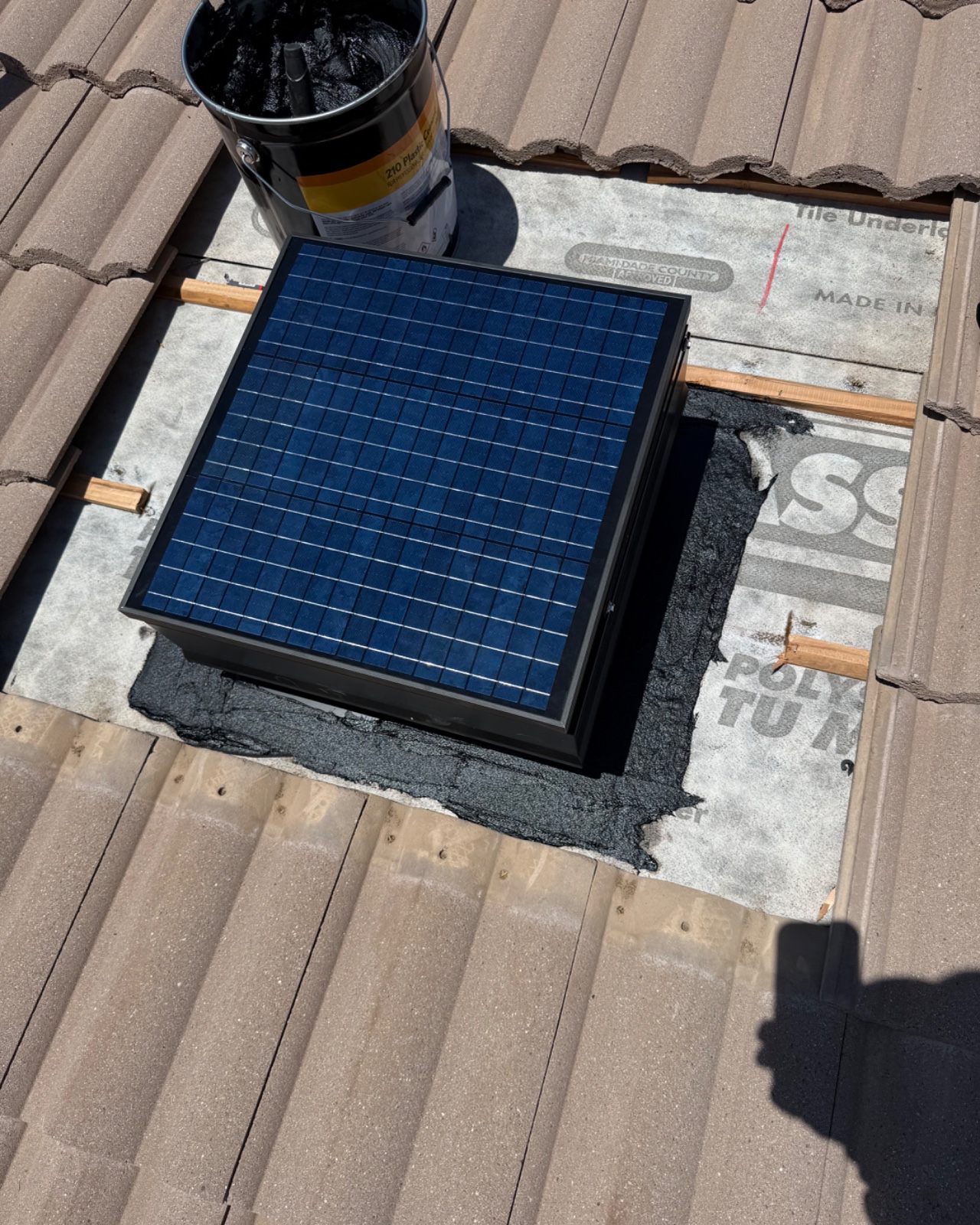
If you've never had a roof penetration done, the idea of someone cutting a hole in your roof might feel a little nerve-wracking. In practice, it's a straightforward job when done by someone who knows what they're doing. The installer starts by choosing the right location on the roof. Typically that means a south- or west-facing slope to maximize sun exposure, positioned away from obstructions like chimneys or HVAC equipment. The spot also needs to be clear of rafters on the underside. Once the location is marked, a hole is cut through the roofing material and the sheathing beneath. The fan unit is set into the opening, and the flashing, which is the metal collar that seals around the base of the fan, is slid under the uphill shingles and over the downhill ones. That layering is what keeps water out. Done correctly, a properly flashed solar attic fan should not leak, even in hard monsoon rain. The solar panel is either integrated into the fan housing or mounted separately on a small bracket nearby, angled toward the sun. There are no electrical connections to make inside the house. The whole job typically takes a few hours, and you don't need to be home for most of it. Afterward, a good installer will check the attic side to confirm the fan is seated correctly and that airflow is moving the way it should.
How Many Fans Does Your Attic Need?
This depends on the square footage of your attic and how much ventilation you currently have. A general rule of thumb in the industry is one CFM (cubic foot per minute) of ventilation for every square foot of attic space, though some guidelines push higher for very hot climates like southern Arizona. A single solar attic fan handles a certain CFM rating, which varies by model. For a smaller home, one fan may be enough. For a larger home or one with a complex roofline that creates dead zones, two fans placed strategically will do a better job than one fan working alone. The other piece is intake. A solar attic fan is only as effective as the air it can pull in. If your soffit vents are blocked by insulation or were never adequate to begin with, the fan will work against negative pressure and underperform. A proper attic assessment looks at both exhaust capacity and intake before recommending how many fans to install.

Solar Attic Fan Installation and Insulation: Why They Work Better Together
A solar attic fan moves hot air out. Insulation slows heat from transferring through your ceiling into the living space below. They address the problem from two different angles, and in a Tucson summer, doing both tends to produce noticeably better results than either one alone. The U.S. Department of Energy recommends R-38 to R-60 for attics in hot climates like southern Arizona. A lot of homes in the Tucson area, especially those built in the 1980s and 1990s, are sitting at R-19 or less. That means even with a solar attic fan doing its job, a significant amount of heat is still pushing through an under-insulated ceiling. When we do attic inspections at Arizona Attic Pros, we often find homeowners who installed a fan hoping it would solve their hot-room problem, but they're still uncomfortable because the insulation underneath was never addressed. The fan and the insulation work as a team. The fan keeps the attic from becoming an oven. The insulation keeps whatever heat remains in the attic from radiating into your home.
Is a Solar Attic Fan Right for Your Home?
A solar attic fan is a good fit for most single-family homes in the Tucson area and the East Valley, especially those with adequate soffit ventilation and a south- or west-facing roof slope. Tile roofs are very common here, and solar fans can be installed on tile, though the flashing technique is a bit different than on shingle roofs. There are a few situations where it makes sense to pause. If your attic is already well-ventilated and your real problem is thin insulation, adding a fan without addressing the insulation first won't move the needle much. If your soffit vents are blocked or non-existent, the fan won't have enough intake air to work efficiently. And if your home is tightly sealed with a conditioned attic design, the calculation is different entirely. That's why an honest attic inspection before any work is the right starting point. It tells you what you're actually dealing with rather than guessing.
What to Ask Before You Book the Job
A few things worth asking any contractor before they get on your roof. First, ask about the flashing. This is where corners get cut. A fan that's installed without proper flashing, or with caulk as a substitute for real flashing, will eventually leak. Ask whether they use step flashing or a full flashing collar, and whether the uphill shingles are lifted and tucked properly. Second, ask about the fan's CFM rating relative to your attic size. A contractor who's done this assessment for your specific home should be able to tell you why they're recommending one fan versus two, or a particular model over another. Third, ask what happens to your existing ventilation. Ridge vents, gable vents, and a powered fan can sometimes work against each other if not balanced correctly. A good installer thinks about the whole ventilation system, not just the new hardware. At Arizona Attic Pros, we offer a free attic inspection before any installation so you know exactly what we're recommending and why. If you have questions or want to get on the schedule, you can call us at (520) 261-3001 or book directly at arizonaatticpros.com/book. We serve Tucson, Marana, Oro Valley, Vail, Sahuarita, and the surrounding communities.
Common Questions
Do solar attic fans work on tile roofs?
Yes, solar attic fans can be installed on concrete or clay tile roofs, which are very common in the Tucson area. The installation requires a different flashing approach than asphalt shingles, typically involving a tile replacement flashing that sits under the surrounding tiles. When done correctly, the seal is just as watertight.
Will a solar attic fan lower my electric bill?
It can contribute to lower cooling costs by reducing the heat load your AC has to fight, but the amount varies depending on your home's insulation levels, how much shading your roof has, and how your HVAC system is set up. The fan itself costs nothing to run since it's solar powered, so any reduction in AC usage is a net gain.
How long does solar attic fan installation take?
For most homes, installation takes a few hours. The work is done from the roof and the attic side, so you don't need to be home for the bulk of it. The number of fans being installed and the roof type can affect the timeline slightly.
Can I install a solar attic fan myself?
The mechanics of it are within reach for a handy homeowner, but the flashing is where DIY installations most often go wrong. An improperly flashed roof penetration can leak for years before the damage becomes obvious. If you're comfortable on a roof and understand how shingle layering works, it's possible. If you're not sure, the cost of professional installation is worth the peace of mind.
What's the difference between a solar attic fan and a ridge vent?
A ridge vent is a passive ventilation system that runs along the peak of the roof and relies on natural convection and wind to move air. A solar attic fan is an active system that mechanically exhausts air at a set CFM rate regardless of wind. In very hot, low-wind conditions like a Tucson summer afternoon, the powered fan typically moves significantly more air than a passive ridge vent alone.
Arizona Attic Pros is a family-owned, fully insured attic insulation and 30W solar fan installation company serving Tucson and the surrounding Arizona desert communities. We provide free attic inspections throughout Tucson, Marana, Oro Valley, Vail, Sahuarita, Casa Grande, and Green Valley.