★★★★★
4.9-Star Rated
55 Google Reviews
← All Articles
October 2026·7 min read

Is Attic Insulation Worth It in Arizona? The Payback Math Explained

For most Tucson-area homes, attic insulation pays for itself in two to four cooling seasons. Here's the honest math behind that number, and what actually drives the payback timeline in southern Arizona.

Attic insulation payback period: The attic insulation payback period is the number of years it takes for cumulative energy savings to equal the upfront cost of the insulation project. It is calculated by dividing the total installed cost by the estimated annual reduction in heating and cooling bills. In hot desert climates with long cooling seasons, payback periods are typically shorter than in moderate climates because the energy savings accrue over more months of the year.

Is attic insulation worth it in Arizona?

For most Tucson-area homes, yes, and the payback window is typically two to four cooling seasons, not a decade. The reason the math works so well here compared to, say, Minnesota is that our cooling season runs roughly seven months, our attics regularly push past 150°F in summer, and an AC system working against that kind of heat load is expensive to run every single day. A well-insulated attic doesn't eliminate the heat, but it slows the rate at which that heat moves into your living space, which means your AC runs fewer cycles to hold temperature.

The question isn't really whether insulation pays back. In this climate it almost always does. The real question is how fast, and that depends on your home's square footage, how thin your current insulation is, and what you're paying for electricity. We'll walk through each piece of that math below so you can run your own numbers.
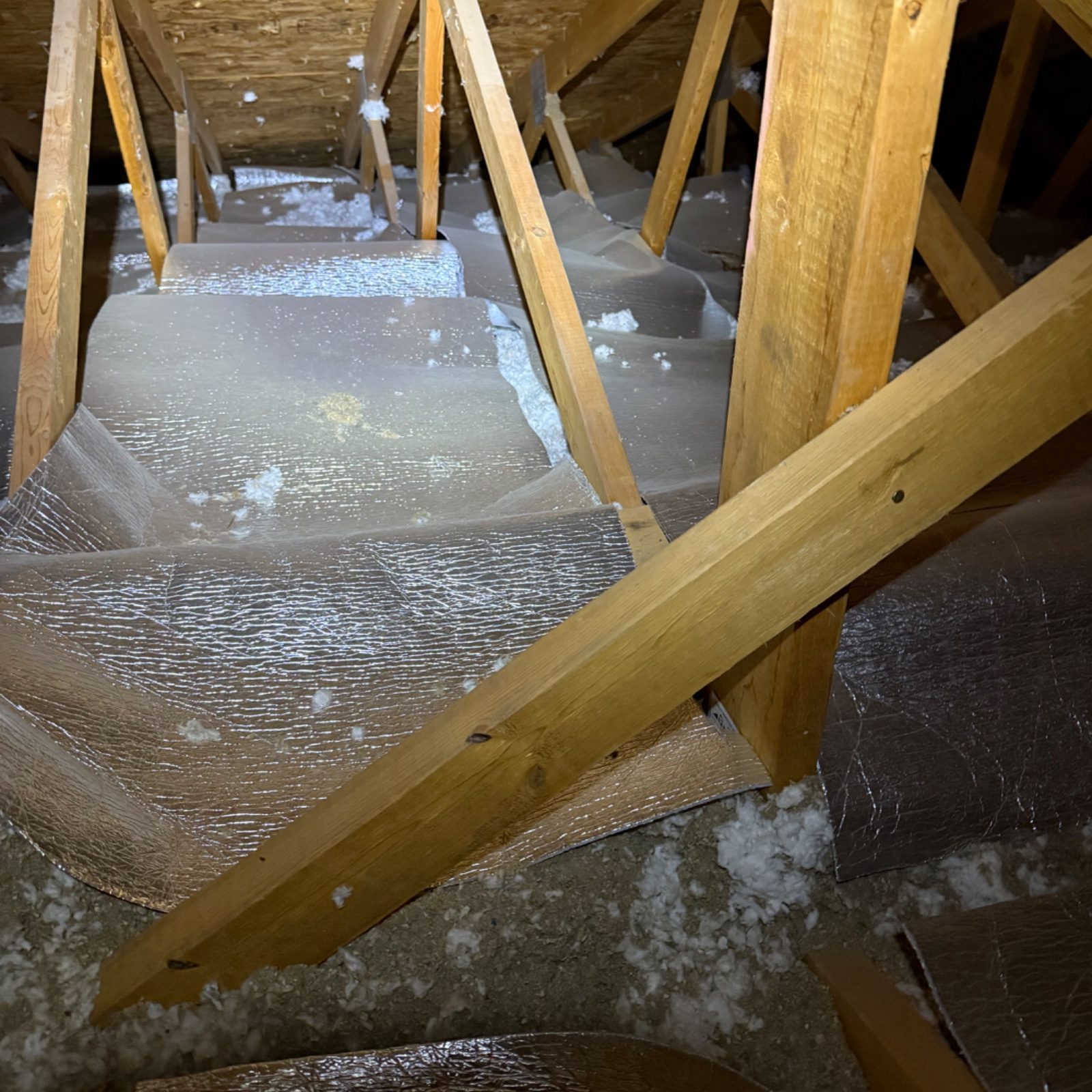
Customer called us out because a competitor of ours installed the insulation like this, only 4 inches of insulation and

What does attic insulation actually cost in Tucson?

Our pricing for blown-in insulation in Tucson runs $1.25 to $2.00 per square foot, and where your job lands in that range depends mainly on how much insulation is already up there. A home that's starting from nearly bare decking needs more material and more passes, so it sits toward the higher end. A home that already has a few inches and just needs a top-up to reach the target R-value costs less per square foot.

To put that in dollar terms: a 1,500-square-foot attic floor comes out to roughly $1,875 to $3,000 installed. A 2,000-square-foot attic runs approximately $2,500 to $4,000. Most installs take two to three hours from arrival to cleanup. The material we use is CertainTeed InsulSafe blown-in fiberglass, which doesn't settle over time and holds its R-value for the life of the home, so you're not paying for a fix that degrades in five years.

If you want a number specific to your home before committing to anything, our free attic inspection gives you a current R-value reading and a written estimate. No obligation, no pressure.

How do you calculate the payback period?

The payback period is simply your total project cost divided by your annual energy savings. Getting that savings number right is the part most people skip, so here's how to think through it honestly.

First, figure out your current annual cooling cost. Pull your last twelve months of electric bills and add up the months from April through October, when your AC is doing the heavy lifting. That's your baseline cooling spend.

Second, estimate the percentage reduction a properly insulated attic delivers. The U.S. Department of Energy cites 10 to 50 percent reductions in heating and cooling costs depending on starting conditions, but in southern Arizona, homes going from minimal insulation (R-6 or less) up to the DOE-recommended R-38 to R-60 for our climate zone tend to see reductions toward the higher end of that range. A conservative working estimate for a Tucson home moving from thin or degraded insulation to R-38 or R-49 is 20 to 30 percent off the cooling portion of the bill.

Third, divide. If your cooling costs run $1,800 per year and insulation saves you 25 percent, that's $450 per year back in your pocket. A $2,000 job pays back in about four and a half years. A $1,500 job at the same savings rate pays back in three and a third years. You can play with your own numbers using our savings calculator.

One thing worth noting: these estimates assume your HVAC system is reasonably maintained and your ducts aren't leaking badly. Insulation helps the envelope; it can't fix a duct system that's dumping conditioned air into the attic.

What R-value do Arizona attics need to hit for the math to work?

The target R-value for attics in DOE Climate Zone 2, which covers Tucson and the southern Arizona desert, is R-38 to R-49 at minimum, with R-60 as the upper end of what the Department of Energy recommends for hot climates. Below R-38, you're leaving meaningful savings on the table. Above R-49, the returns diminish, though R-49 to R-60 can still make sense in homes with very high cooling bills or poor existing coverage.

Most older Tucson homes we inspect are sitting at R-11 to R-19, sometimes less. Homes built in the 1970s and 1980s often have the original builder-grade fiberglass batts, which have compressed and settled over decades. A home at R-11 jumping to R-38 sees a much bigger energy drop than a home going from R-30 to R-38, which is why the payback math is so favorable for older or under-insulated homes.

For more detail on how to choose the right target for your specific home, our post on R-38 vs R-49 vs R-60 insulation for Tucson homes walks through the tradeoffs without the sales pitch.

Does adding a solar attic fan improve the payback?

Adding a 30W solar attic fan alongside insulation can shorten the payback window by reducing peak attic temperatures, which in turn reduces the rate at which heat conducts through even well-insulated ceilings. The fan runs on its own solar panel, so there's no added electricity cost. On a clear July day in Tucson, it runs at full speed exactly when you need it most.

The combination works because insulation and ventilation solve different parts of the same problem. Insulation slows heat transfer through the ceiling assembly. A solar attic fan lowers the temperature of the air sitting above that insulation, which reduces the temperature differential the insulation is working against. Lower differential, less heat pushing through, less load on your AC.

We offer an insulation and solar fan combo for homeowners who want to address both at once, and doing them together in a single visit is more efficient than scheduling two separate jobs. If you're already having the attic done, it's worth asking about adding the fan at the same time.

What makes the payback faster or slower for a specific home?

Four factors move the payback timeline the most, and understanding them helps you set realistic expectations before you get a quote.

Starting R-value matters most. A home at R-6 has far more to gain than a home at R-30. The bigger the gap between where you are and where you need to be, the larger the annual savings and the faster the payback.

Home size affects total project cost but not necessarily the per-square-foot savings rate. Larger homes cost more to insulate but also have more ceiling area losing heat, so the savings tend to scale proportionally.

Electricity rates directly affect how much each kilowatt-hour saved is worth. Tucson Electric Power and other local utilities have tiered rates that push costs higher in summer months, which means summer savings are worth more per unit than the annual average suggests.

Attic conditions can complicate the job. Homes with common attic problems like air gaps around recessed lights, unsealed penetrations, or poor ventilation may not see the full benefit of new insulation until those issues are addressed alongside the insulation work. During our free inspection, we flag anything that would limit the effectiveness of the install.

How do we get started if we want a real number for our home?

The most useful first step is a free attic inspection, which gives you an actual current R-value reading, a look at the existing insulation condition, and a written estimate for the work. There's no charge for the inspection and no obligation to book anything afterward. We're available Monday through Saturday, 7 AM to 6 PM, and same-day appointments are often available for homes in the Tucson metro, including Marana, Oro Valley, Vail, and Sahuarita.

You can book a free attic inspection online or call us directly at (520) 261-3001. If you're in the Phoenix East Valley or Sierra Vista area, we schedule service days for those areas as well. Most installs, once you decide to move forward, are done in two to three hours.

We're licensed under Arizona ROC #365778 and carry a 4.9-star rating across 47 Google reviews. If you want to read what other Tucson homeowners have said about the process and the results, our reviews page has the unfiltered version.

Common Questions

How much can attic insulation actually reduce my electric bill in Tucson?

Homes moving from thin or degraded insulation up to R-38 or R-49 commonly see 20 to 30 percent reductions in their cooling costs. The exact amount depends on your starting R-value, home size, and how well the rest of the building envelope is sealed. Homes with very little existing insulation tend to see the largest percentage drops.

Does attic insulation help in winter too, or just summer?

It helps in both directions. Insulation slows heat movement regardless of which side is hotter, so in winter it keeps heated air inside the living space instead of letting it escape through the ceiling. Tucson winters are mild, but attic temperatures can drop into the 80s and 90s on cold nights, and the same insulation layer that blocks summer heat keeps conditioned air in during those months.

How long does CertainTeed InsulSafe blown-in fiberglass last in an Arizona attic?

CertainTeed InsulSafe blown-in fiberglass does not settle and holds its R-value for the life of the home, so you're not looking at a material that degrades or needs to be replaced on a schedule. Unlike some other insulation types, it won't compact under its own weight over time in the heat conditions typical of a Tucson attic.

Is it worth insulating an older home that already has some insulation in the attic?

Usually yes, if the existing insulation is below R-38. Most Tucson homes built before the mid-1990s have original insulation that has compressed over the years and may be reading R-11 to R-19 or less. Topping up to R-38 or R-49 with blown-in fiberglass over the existing material is straightforward and typically delivers meaningful savings. The free inspection will give you the current R-value so you know exactly where you're starting from.

Can I get insulation and a solar attic fan done in the same visit?

Yes. We offer an insulation and solar fan combo that covers both in a single appointment. Doing them together is more efficient than two separate visits, and the two upgrades complement each other: the fan lowers peak attic air temperature, which reduces the heat load the insulation is working against.

About Arizona Attic Pros

Arizona Attic Pros is a family-owned, fully insured attic insulation and 30W solar attic fan installation company (Arizona ROC #365778) run by Mike, the owner. We install CertainTeed InsulSafe blown-in fiberglass to R-38 to R-49 and provide free attic inspections throughout the Tucson metro, Sierra Vista and Cochise County, and the Phoenix East Valley.

Related Articles

April 2026
5 Ways to Reduce AC Costs This Tucson Summer
Read →
October 2026
Radiant Barrier vs Blown-In Insulation in Arizona: Which One Does Your Attic Actually Need?
Read →
September 2026
How Hot Does a Tucson Attic Get by Month? A Real-Numbers Guide
Read →