★★★★★
4.9-Star Rated
55 Google Reviews
← All Articles
October 2026·6 min read

How Attic Insulation Changes Your TEP or APS Electric Bill

Attic insulation reduces the heat load your AC fights every summer, and that shows up directly on your TEP or APS bill. Here's how the math works and what you can realistically expect.

Attic insulation (blown-in fiberglass): Blown-in fiberglass attic insulation is a loose-fill material installed by blowing it across the attic floor to a measured depth, creating a thermal barrier between the hot attic space and the conditioned living area below. Its effectiveness is rated by R-value, a measure of resistance to heat flow, with higher numbers indicating greater resistance. In hot climates, the U.S. Department of Energy recommends R-38 to R-60 for attic installations.

How does attic insulation actually affect a TEP or APS electric bill?

Attic insulation reduces the amount of heat that pours through your ceiling into your living space, which means your air conditioner runs fewer hours per day to hold a set temperature, and fewer hours means a lower kilowatt-hour total on your bill. TEP and APS both charge by the kilowatt-hour, so any sustained drop in AC runtime shows up as real dollars on the next statement. The connection is direct: less heat in, less cooling out, lower bill.

The reason this matters so much in southern Arizona is that our attics are extreme by any national standard. Summer attic temperatures in Tucson regularly exceed 150°F. At that temperature, even a well-sealed ceiling becomes a radiant heat source pushing warmth into every room below it. Your AC isn't just fighting the outdoor air; it's fighting a superheated attic that sits directly above your living space for eight to ten hours every afternoon. Insulation is the layer that slows that transfer down.
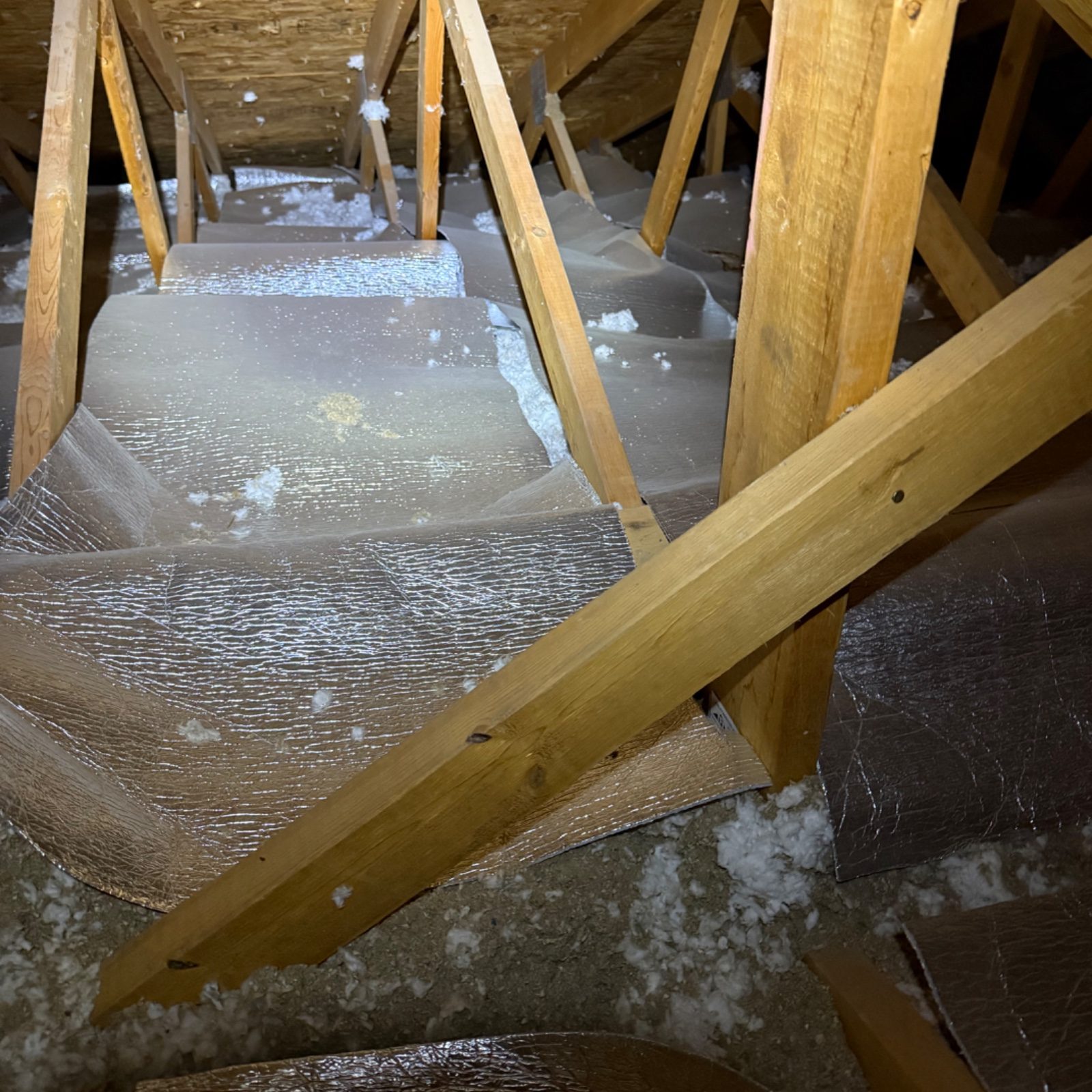
Customer called us out because a competitor of ours installed the insulation like this, only 4 inches of insulation and

Why is the attic the biggest factor in summer cooling costs?

The attic is the biggest single source of heat gain in a Tucson or East Valley home because the roof absorbs direct solar radiation all day and the enclosed attic space has almost no way to shed that heat on its own. Walls get shade from overhangs, trees, and neighboring structures. The roof gets none of that. A dark shingle roof in July is absorbing heat from roughly 7 AM to 6 PM without a break.

That heat conducts through the roof deck and into the attic air, and from there it moves through your ceiling drywall into the conditioned space below. The rate at which it moves depends almost entirely on how much insulation is between the attic floor and your ceiling. A home with R-11 or R-13 in the attic, which is common in older Tucson construction, offers almost no resistance to that transfer. A home brought up to R-38 or R-49 slows it dramatically. The DOE recommends R-38 to R-60 for attics in hot climates like ours, and we target R-38 to R-49 for most homes we work on here in the Tucson metro. You can read more about how those R-values compare on our attic insulation page.

What does 'fewer AC hours' look like in real terms on a bill?

A central air conditioner in a typical Tucson home draws roughly 3 to 5 kilowatts per hour of operation. If adding insulation cuts the number of hours your system runs by even one hour per day during the summer cooling season, that's 90 to 150 kilowatt-hours saved over a 90-day stretch. At current TEP residential rates, that translates to a meaningful reduction in the cooling portion of your bill. The exact dollar figure varies by home size, existing insulation depth, and how aggressively you set your thermostat, but the mechanism is consistent.

The homes where we see the most dramatic before-and-after difference are those with very thin or degraded insulation, typically older homes built before the mid-1990s when energy codes were looser. If you're starting from R-11 or less and we bring you to R-38, the gap we're closing is large. If you're already at R-30 and we're topping you off to R-49, the improvement is real but more modest. That's why we look at what's already in the attic before we quote anything. Our savings calculator can give you a starting estimate based on your home's square footage.

What insulation material do we install, and does the product matter?

We install CertainTeed InsulSafe blown-in fiberglass, and yes, the product matters for long-term performance. CertainTeed InsulSafe does not settle over time and holds its R-value for the life of the home, which means the improvement you see on your bill in year one is still there in year ten. Some materials compress or shift in the attic environment, gradually losing the R-value you paid for. That doesn't happen with InsulSafe.

Blown-in fiberglass also has a practical advantage for existing homes: it fills around joists, wiring, and any irregularities in the attic floor without gaps. Gaps are where heat sneaks through, and in a 150°F attic, even a small uninsulated patch above a bedroom or living room makes itself known. The blown-in process lets us achieve consistent depth across the whole attic floor, which is what actually produces the even cooling you notice room to room. You can learn more about the material and process on our blown-in insulation page.

Does adding a solar attic fan help the bill even more?

Yes, a solar attic fan lowers the peak temperature the insulation has to resist, which makes the insulation work more efficiently. We install a 30W solar attic fan that runs entirely on sunlight, so it operates hardest exactly when the attic is hottest, with no added draw on your TEP or APS meter. It pulls superheated air out of the attic space and replaces it with outside air drawn through soffit vents, keeping the attic from building up to its worst temperatures in the mid-afternoon.

Insulation and attic ventilation work together rather than substituting for each other. Insulation slows the transfer of heat through your ceiling; the fan reduces the temperature of the heat source itself. Many of our customers in Tucson, Marana, and Oro Valley choose our insulation and solar fan combo because the two improvements compound each other. The fan is most effective when the insulation is already doing its job, and the insulation gets to work against a cooler attic when the fan is running.

How much does the work cost, and how long does an install take?

Our pricing for blown-in insulation runs $1.25 to $2.00 per square foot, and where a job lands in that range depends on the current insulation depth in your attic. A home with very little existing insulation requires more material to reach R-38 or R-49, so it lands toward the higher end. A home that already has some insulation and just needs a top-up costs less per square foot. We look at what's there before we give you a number, because quoting without seeing the attic isn't honest.

Most installs take 2 to 3 hours from setup to cleanup. We work Monday through Saturday, 7 AM to 6 PM, and same-day appointments are often available for homes in the Tucson metro, including Marana, Oro Valley, Vail, and Sahuarita. Customers in Sierra Vista and Cochise County and in the Phoenix East Valley are served on scheduled service days. If you want to understand the full cost picture before booking, our attic insulation cost page walks through the variables in detail. We're also licensed under Arizona ROC #365778, so you can verify us before you commit to anything.

What should you do before your next summer billing cycle?

October is actually one of the best times to get this done. The attic is still accessible and warm enough to see exactly what's going on up there, but we're not working in the worst of the summer heat. More importantly, if you get the insulation in now, you're ready before next May rather than scrambling once the bills are already climbing.

The first step is a free attic inspection. We come out, measure the existing depth, check for any gaps or problem areas, and tell you honestly what we see. There's no pressure to book anything on the spot. If the attic is fine, we'll say so. If there's a real gap between what you have and what you need, we'll show you the numbers. You can book a free inspection online or call us at (520) 261-3001. We're available Monday through Saturday, 7 AM to 6 PM. If you're still weighing whether the investment makes sense, our post on whether attic insulation is worth it in Arizona walks through the payback math in plain terms.

Common Questions

How soon after installation will I notice a change on my electric bill?

Most homeowners notice a difference within the first full billing cycle after installation. The change is most pronounced during the hottest months, when the gap between attic temperature and indoor temperature is largest and your AC was previously working hardest to compensate.

Does attic insulation help in winter too, or only in summer?

It helps in both directions. In winter, attic temperatures in Tucson drop to the 80s and 90s Fahrenheit, and insulation slows heat from escaping upward through the ceiling. Tucson winters are mild, so the winter savings are smaller than summer savings, but they're real and they add up across the heating season.

Will adding insulation fix hot rooms, or just lower the bill?

Both, typically. Hot rooms are usually hot because heat is moving through the ceiling faster in that spot than the AC can offset it. Bringing the whole attic floor to a consistent R-38 or R-49 evens out the thermal resistance across every room, which tends to reduce the temperature difference between the hottest and coolest rooms in the house.

Can I see what the attic looks like before and after?

Yes. Our [Our Work page](https://arizonaatticpros.com/our-work) shows real installs we've completed, and our [reviews page](https://arizonaatticpros.com/reviews) includes feedback from customers across the Tucson area. We hold a 4.9-star rating from 47 Google reviews, and the inspection itself gives you a firsthand look at your own attic before any work begins.

Do I need to be home during the installation?

Someone does need to be available to provide attic access at the start of the job, but most installs are finished in 2 to 3 hours, so the time commitment is modest. We work Monday through Saturday from 7 AM to 6 PM, which gives most homeowners flexibility to schedule around a work-from-home morning or a half day.

About Arizona Attic Pros

Arizona Attic Pros is a family-owned, fully insured attic insulation and 30W solar attic fan installation company (Arizona ROC #365778) run by Mike, the owner. We install CertainTeed InsulSafe blown-in fiberglass to R-38 to R-49 and provide free attic inspections throughout the Tucson metro, Sierra Vista and Cochise County, and the Phoenix East Valley.

Related Articles

October 2026
Is Attic Insulation Worth It in Arizona? The Payback Math Explained
Read →
April 2026
5 Ways to Reduce AC Costs This Tucson Summer
Read →
October 2026
Radiant Barrier vs Blown-In Insulation in Arizona: Which One Does Your Attic Actually Need?
Read →